
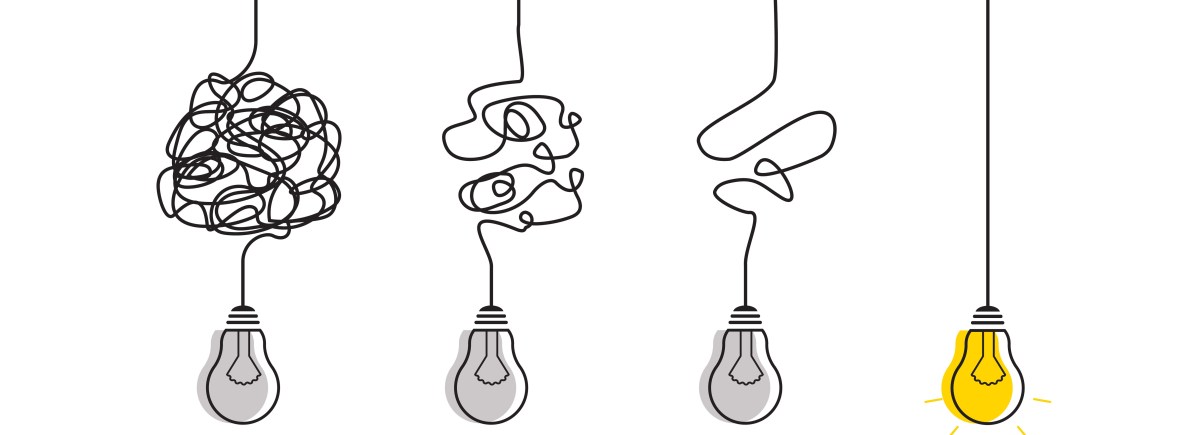
01. Why Anxieties Persist Despite Insight
One of the first steps in addressing anxieties is to distinguish whether one’s anxiety system (which is actually our personal alarm system) is accurately responding to a threat or just setting off a false alarm. It would be nice if having this insight is sufficient, but it rarely is. So, for instance, a person who washes his hands 20+ times might realise washing one’s hands once or twice is enough, and the anxiety towards germs is a false alarm. Yet such realisations, while necessary, is insufficient. Typically, the person would still be anxiously driven to hand-wash 20+ times. This gap between one’s “head-level” understanding and “heart-level” feelings can easily cause maddening frustrations.
It’s a Feature, Not a Bug
Why does the anxiety system fail to correct its responses after the person realises that the threat is exaggerated or even non-existent? Is this because something is defective or “disordered” in the minds or brains of those struggling with anxiety problems? Not at all. The way our anxiety system operates independently from our conscious cognitive system (e.g., conscious realisations) is a feature, not a bug.
Recall that the anxiety system is basically an alarm system. For any alarm (think fire or security alarm) to serve its function of alerting people to threats they are not aware of, it must be detecting signs of threats outside of those people’s awareness, then automatically decide whether the alarm should go off without those people’s involvement.
By extension, for the anxiety system to serve as our personal alarm, it must be scanning for and making decisions about threats outside of our conscious awareness – and therefore operate outside of our conscious influence.
Another feature of alarms is that they must be working 24/7, something our conscious mind is unequipped to do. If the Nobel Prize winning psychologist can be believed, then we have another mental system better suited to this kind of tasks. There is what he calls System 1, which is an evolutionarily old (think “reptilian brain”) faculty that is largely incapable of comprehending language or logic, but can work unconsciously in the background independent from the more intelligent but easy-to-tire System 2.
How Do We Correct It Then?
The point is, our language-based reasoning and conscious judgement about the absent of threats are incomprehensible to the largely non-verbal, non-rational, and unconscious mental faculty that controls anxiety responses. By way of analogy, trying to use language and logic to shift our anxiety system (i.e., trying to talk ourselves or our reptilian brain out of anxiety) can be as futile as trying to train a reptile using reasoning and verbal explanations.
How then do we correct patterns of false alarm anxieties? The exceedingly short answer is that we can change (aka “condition”) our anxiety system through experiences (i.e., the anxiety system, just like the reptile, may not learn through conscious verbal reasoning, but it can learn through experience), such as “facing our fears” when we know the threat is exaggerated or absent.
But if it were that simply, anxiety problems would not be so common and persistent. There are many caveats and make-or-break aspects to these tasks. Done in the wrong way and we could make our anxieties worse rather than better. Additionally, while the described model captures most anxiety presentations, there are complex exceptions. Thus, it is often worth seeing a Clinical Psychologist for assistance.
Phone: 0415 811 277
Email: info@psycspot.au
Suite 410 / 77 Dunning Ave
Rosebery NSW 2018 (Near The Cannery)
Shop G05 / 659-669 Gardeners Rd
Mascot NSW 2020 (Near Mascot Station)
Originally written in 2020 by Justin Leung
Principal Clinical Psychologist | Guest Lecturer

