
02. Beliefs Shattering Trauma
Sensationally intense symptoms like nightmares, flashbacks, startle responses and such often capture the spotlight when we think of trauma in general or PTSD in particular. Yet these are not necessarily the worst aspects of being traumatised. In fact, some individuals deeply affected by their psychologically scarring experience may not even display these symptoms.
A somewhat less obvious effect of trauma is that they often shatter our assumptive belief system. Views like the world being a fair and just place (e.g., we get what we deserve), is largely predictable and even controllable (e.g., if I do this, I can prevent that), people who look kind are indeed kind etc. are all examples of beliefs that can be violently shattered by traumatic experiences.
To be sure, the above beliefs are overly optimistic at best and naïve at worst, but these “illusions” are functional in the sense that they motivate us to do what’s generally helpful and reduces the need to be constantly anxious. Many of us are implicitly driven to preserve those functional “illusions”, and when traumatic realities suggest they are false, a lot of us will distort our perceptions of what happened so they pose less of a threat to our valued belief system.
Puzzling But Comprehensible Effects
Perhaps the best researched example is “blaming the victim” (e.g., if that “victim” did not do this and/or fail to do that, then the incident could not have happened, it is their fault). Researchers termed this the “just world phenomenon” (i.e., the world is fair, those who got negative outcomes deserved it somehow). Notably, it is not just onlookers who blame the victims, trauma survivors also tend to blame themselves (often stating they know it was not their fault, but cannot shake off the self-blame), leading to irrational guilt, shame, and other problems.
Others shift more radically. For example, some individuals report acting in uncharacteristically promiscuous ways after sexual assaults. While some express feeling “broken already” and “nothing matters anymore” (which explains their shift in behaviours), others vehemently assert (and may prompt the therapist to agree) sexual experiences with strangers should actually be no big deal anyway (i.e., the initial unconsented sex as well as the subsequent casual sex meant nothing).
Arguably, these may be attempts to radically change one’s long-held beliefs (i.e., from conservative to promiscuous) to “normalize” the traumatic experience. While they could, for a while, prevent the trauma from shattering our cherished beliefs (e.g., “the world is safe”), they come at the cost of complicating one’s problems.
Of course, not everyone tries and manages to preserve these “illusions”. Many are left with overly shattered world views or extreme disillusionment (e.g., the world is utterly unsafe, people who look kind are two faced).
Meaning Making and Cognitive Processing
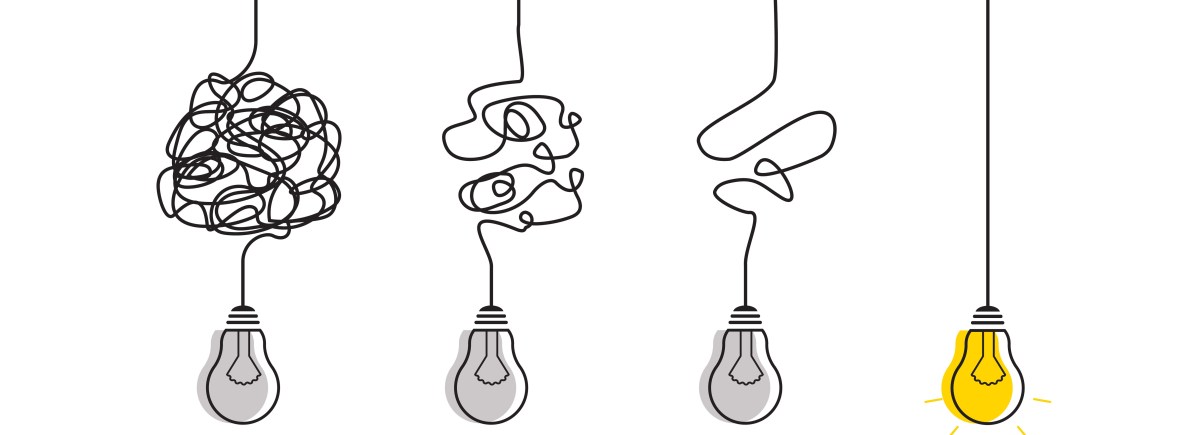
Instead of blindly preserving or overly shattering these “illusions”, what one needs to do is carefully revise our casually simplified and implicitly endorsed world views, something that is achieved in therapy when we cognitively and emotionally “process” the traumatic experiences.
As painful as the process may be, people typically report psychological growth as an outcome. When work on trauma is needed, it is often worth see a Clinical Psychologist for assistance.
Phone: 0415 811 277
Email: info@psycspot.au
Suite 410 / 77 Dunning Ave
Rosebery NSW 2018 (Near The Cannery)
Shop G05 / 659-669 Gardeners Rd
Mascot NSW 2020 (Near Mascot Station)
Originally written in 2020 by Justin Leung
Principal Clinical Psychologist | Guest Lecturer

